
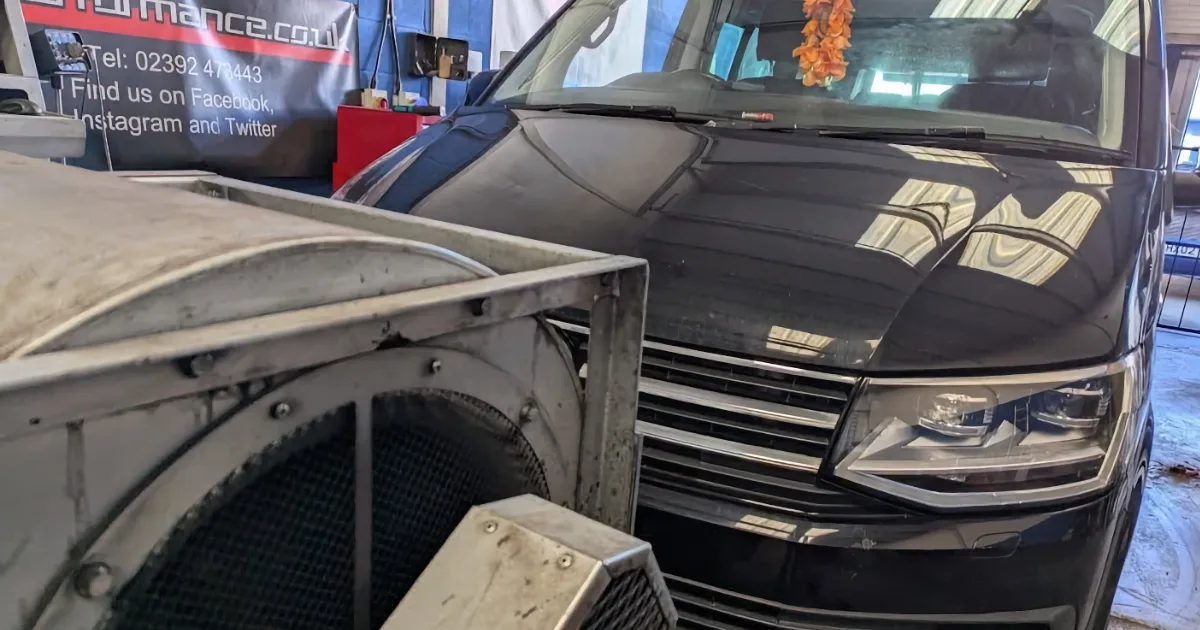
This 2017 VW T6 DSG came in already close to where it should be, but not quite there. It had the Delphi ECU, so before anything else, the software was brought fully up to date and a DPF regen carried out. Then the proper work began.
What followed wasn’t guesswork. It was measured, tested, and dialled in on the dyno.
When “Nearly Right” Isn’t Actually Right
On paper, this van should have been sitting nicely already. In reality, it came in at 195 bhp and 430 Nm. Not bad, but not quite where it should be.
This is more common than people think. Software updates get missed. Regens don’t happen properly. Things drift slightly over time. None of it screams “problem”, but it all adds up to a van that isn’t giving you what it should.
And that’s before you even talk about how it drives.
Doing It Properly Before Turning It Up
Before touching the map, everything was brought up to standard.
Software updates applied.
DPF regen completed.
Checks done to make sure the engine was behaving as it should.
Only then do you start adjusting anything.
That matters. Because if you tune on top of issues, you’re just masking problems and creating bigger ones later. Pendle’s approach is built around proper calibration and testing, not just chasing numbers .
The Numbers Tell One Story, The Torque Curve Tells the Real One
Final figures came out at 248 bhp and 510 Nm.
VW T6
2.0 TDI DSGThat’s a solid gain. But the real highlight here isn’t the peak numbers. It’s the torque curve.
Smooth, consistent, and usable right through the rev range. No spikes. No awkward surges. Just clean pull exactly where you need it.
That’s what makes a van nicer to drive every day. Not just quicker on paper.
What That Actually Feels Like
You notice it straight away.
Pulling away is easier.
Mid-range feels stronger and more responsive.
You’re not constantly working the gearbox to keep it in the right place.
And with a DSG, that smooth torque delivery makes an even bigger difference. It just suits the way the gearbox operates.
It ends up feeling like the van should have done from factory, not like something that’s been pushed beyond its limits.
Straightforward If You Want It Done
If you’re thinking about it, just get it booked and have a proper look at what your van is actually doing now.
A Pendle remap at TH Performance starts at £349. Use code WEBSITESPECIAL for 10% off when booking online.
Booking is simple at thperformance.co.uk/booking. Pick your slot, turn up, and it’s all handled properly.
If you’ve got questions, message directly. Social posts get missed. Messages don’t.
And yes, there’s a reason people travel for this and keep coming back.
Questions People Actually Ask Before Booking
Will a remap like this affect reliability?
No, not when it is done properly. The process starts with checks, updates, and making sure the engine is healthy before any tuning is applied. The aim is to improve how the engine delivers power, not push it beyond safe limits.
Is the increase in power safe for a DSG gearbox?
Yes, within sensible limits. Smooth torque delivery is key, especially with DSG gearboxes, and that is exactly what is focused on. The goal is drivability and consistency, not aggressive spikes that cause stress.
Why was a software update and DPF regen done first?
Because tuning on top of outdated software or a partially blocked DPF leads to poor results. Bringing everything up to standard first ensures the engine is working as it should before any changes are made.
Are the gains always as high as this?
Not always. Every vehicle is different depending on condition, previous work, and how it is currently running. The figures here are a result of a healthy engine and careful calibration, not a guaranteed outcome for every van.
Is a remap actually worth doing on a van like this?
If you use the van regularly, especially for work or long journeys, then yes. The improvement in drivability, smoother power delivery, and better mid-range pull make it easier and more comfortable to drive day to day.
Will it improve fuel economy as well as performance?
It can, but it depends on how you drive. The engine runs more efficiently, so steady driving can return better mpg. If you enjoy the extra power all the time, any gains in economy will naturally reduce.